


Key Takeaways
- Memory shifts alter how your loved one processes words.
- Tone of voice has a massive impact on interactions.
- Focus on feelings rather than correcting facts.
- Gentle redirections help prevent frustration.
Family Communication Tips for Memory Loss
Conversations with a loved one experiencing memory loss often feel challenging, especially when familiar phrases suddenly cause confusion or frustration. Adapting your communication style helps your loved one feel safe and respected during every interaction. Small changes in how you speak can make a significant difference in their daily comfort.
Your words hold power when someone experiences early memory shifts and cognitive changes. A simple comment might trigger anxiety when it relies on memories they can no longer access. Skipping certain phrases creates a peaceful environment, builds stronger connections, and helps you enjoy your time together.
How Memory Loss Changes Daily Conversations
The Shift in Brain Function
Memory shifts alter how people process words and sentences over time. Logic and reasoning often decline as these changes progress. This shift means that standard explanations might not make sense to your loved one anymore.
Emotions remain strong even when specific words fade away. Your loved one might forget a conversation, but they retain the feelings associated with it. This emotional memory plays a huge role in how they respond to your visits.
Why Your Approach Matters
Your tone of voice speaks louder than the actual words you choose. A calm approach helps prevent feelings of frustration or anxiety. Your loved one picks up on stress and might mirror those feelings back to you, which can derail a pleasant visit.
Simple adjustments keep the conversation safe and enjoyable. You can guide the interaction in a positive direction with thoughtful responses. A warm approach fosters a sense of security and trust.
Everyday Phrases & Comments to Avoid
Phrases About Memory
Questions and comments that test someone’s memory can draw attention to what they can’t recall. Instead of asking them to search for missing information, offer the details they need.
1. Don’t You Remember?
This question can make your loved one feel embarrassed or pressured. Try sharing the information directly: “We visited Sarah yesterday. We had coffee together.”
2. I Already Told You That.
Your loved one may not remember the earlier conversation. Answering again in the same calm manner can help them feel reassured.
3. You Just Asked Me That.
Repeated questions may reflect worry, uncertainty, or a need for reassurance. Respond to the concern behind the question, even if you’ve already answered it.
4. You Just Ate
A person living with dementia may not remember their last meal. You might say, “Lunch is finished, but I can get you a small snack,” while also checking whether they’re hungry, thirsty, or seeking comfort.
5. Do You Know Who This Is?
Asking someone to identify a person can feel like a test. Introduce the visitor instead: “This is your niece, Anna. She came to spend some time with us.”
6. What Did You Do This Morning?
Broad questions rely on recent memory. Try offering context: “I heard you listened to music this morning. What kind of music do you like?”
7. Do You Know What Year It Is?
Questions that test orientation may cause stress without improving understanding. If the date matters, share it naturally or point it out on a calendar.
8. Try Harder to Remember
Dementia-related memory changes aren’t caused by a lack of effort. Give your loved one time to respond, and gently provide the information if they’re having difficulty.
9. Think About It
This instruction can add pressure when your loved one is already searching for an answer. Offer a cue or move the conversation forward without drawing attention to the forgotten detail.
10. Look at the Calendar
Calendars and written reminders may help some people, but a sharp instruction can sound dismissive. Try looking at the calendar together and calmly pointing out the information.
Corrections That May Cause Distress
A person living with dementia may remember an earlier time or understand a situation differently. Correcting every detail can lead to sadness, frustration, or an argument.
11. You’re Wrong
A direct correction can make your loved one feel dismissed. If the detail isn’t related to health or safety, consider letting it pass and focusing on the meaning behind what they’re saying.
12. That’s Not What Happened
Your loved one’s version of an event may feel real to them. You can acknowledge their feelings without debating each detail.
13. Your Parents Passed Away
This reminder may cause someone to experience grief again. If they ask for a parent, respond to the emotion: “You miss your mom. Tell me something you love about her.”
14. You Don’t Work Anymore
Someone who believes they need to go to work may be expressing a desire for routine or purpose. You might say, “Everything is taken care of today. Would you help me with this instead?”
15. This Is Your Home Now
If your loved one asks to go home, they may be looking for comfort rather than a specific place. Try asking, “What do you miss about home?” Their answers may help you understand what they need.
16. Why Would You Do That?
“Why” questions can sound critical and may require reasoning that has become difficult. Calmly address what needs attention without placing blame.
17. Why Did You Put That There?
Your loved one may not remember moving the item. Help look for it or return it to its usual place without turning the situation into a correction.
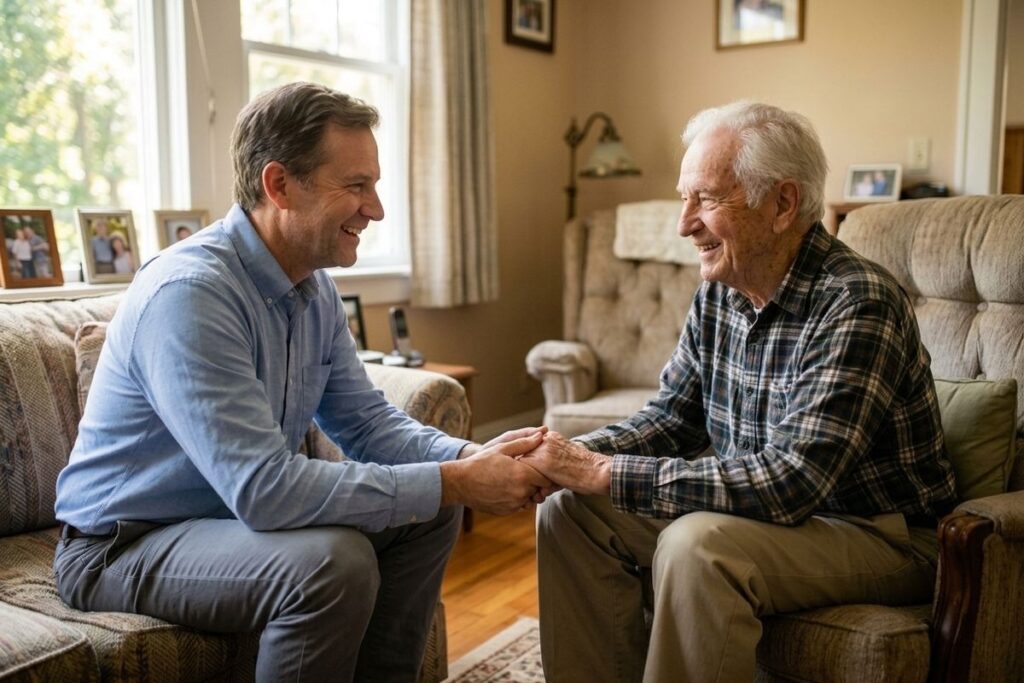
An adult on a sofa and an older adult in an armchair sit facing each other in a living room, holding hands and smiling.
Questions & Instructions to Simplify
Open-ended questions and complex tasks can require several decisions at once. Clear wording and limited choices can help your loved one stay involved without feeling rushed.
18. What Do You Want to Do Today?
A broad question may feel like too much to sort through. Offer two clear options instead: “Would you like to listen to music or sit outside?”
19. How Do You Fix This?
Problem-solving tasks may become frustrating. Break the task into small steps, demonstrate what to do, or complete it together.
20. Calm Down
Being told to calm down can make someone feel that their emotions aren’t being heard. Speak slowly, reduce nearby distractions, and offer reassurance: “I’m here with you. We’ll take our time.”
Better Responses & Helpful Conversation Strategies
Focus on Feelings Rather Than Facts
Focus on your loved one’s feelings rather than correcting the facts. Offer reassurance through a calm tone, gentle touch, or warm smile, and invite them to share familiar memories. If the conversation becomes tense, redirect their attention with a favorite activity, snack, drink, or simple task. Use clear language, visual cues, and two simple choices to help them stay involved without feeling overwhelmed.
Next Steps for Family Support & Community Options
Explore Memory Care Lifestyles
You can look into senior living communities with specialized support teams. These environments prioritize respect for every person. You can find peace of mind knowing they receive the attention they deserve.
Specialized memory care lifestyles emphasize daily joy and personalized support. The compassionate team provides a warm environment where your loved one can thrive. This type of setting helps families feel comfortable with the care provided.
Support for More Meaningful Conversations
Supportive communication starts with patience, reassurance, and respect. By focusing on your loved one’s feelings instead of correcting every detail, you can help conversations feel calmer and more connected.
At Barton House Senior Living, we provide personalized memory care centered on the Through Their Eyes philosophy. We provide care with an empathetic foundation to create an environment for your loved one that feels safe and where connection is prioritized.
Book a tour with our compassionate memory care community to learn more.